
Georgia Materialmen’s Liens: 10 Ways Contractors and Suppliers Can Strengthen Commercial Collections
By Mark A. Cobb | Georgia Construction Attorney | Cobb Law Group
How a Georgia Materialmen’s Lien Changes the Construction Payment Chain
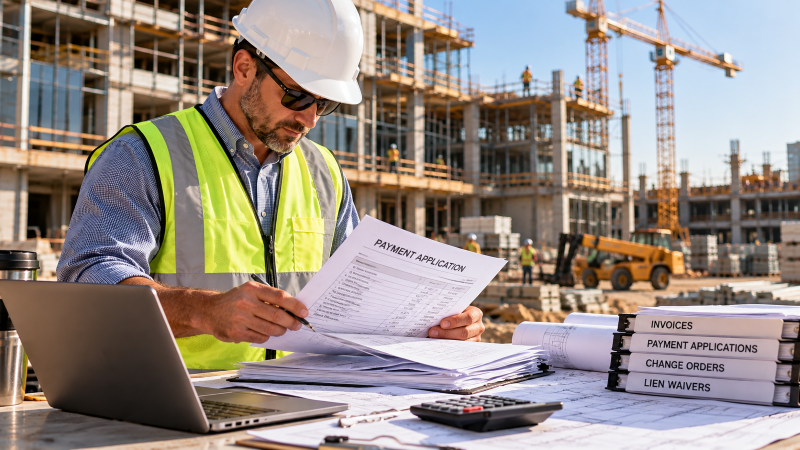
Georgia materialmen’s liens help contractors, subcontractors, and suppliers protect their payment rights and recover unpaid construction accounts.How a Georgia Materialmen’s Lien Changes the Construction Payment Chain
On most commercial construction projects, payments flow from the property owner through the general contractor and subcontractors before reaching material suppliers. When payments stop, a lower-tier contractor or supplier may have limited contractual remedies against parties higher in the payment chain. A properly filed Georgia materialmen’s lien can change that dynamic by creating a statutory claim against the improved property and encouraging the owner, general contractor, and construction lender to become involved in resolving the payment dispute.
For commercial contractors, specialty subcontractors, and material suppliers, unpaid construction accounts are more than an inconvenience. They affect cash flow, credit availability, profitability, and the ability to take on new work.
A $200,000 unpaid receivable can have serious consequences for a specialty subcontractor. For a regional or national building-material supplier, several delinquent accounts on major construction projects can represent millions of dollars in outstanding credit exposure.
Georgia’s mechanic’s and materialmen’s lien laws provide an important tool for managing these risks. A properly filed lien can do far more than preserve a legal claim. It can bring property owners, general contractors, lenders, and other financially interested parties into the payment discussion.
At Cobb Law Group, our construction attorneys assist commercial contractors, subcontractors, and material suppliers with Georgia construction collections, materialmen’s liens, payment bond claims, and commercial construction litigation involving substantial unpaid construction accounts. The most effective construction collections strategy is not necessarily the most aggressive one. It is the strategy that uses available legal remedies to create the greatest opportunity for recovery while controlling collection costs.
1. A Materialmen’s Lien Can Turn an Unsecured Receivable into a Claim Against Real Property
A supplier may extend $350,000 in credit to a subcontractor furnishing materials for a distribution warehouse. The supplier delivers the materials, but the subcontractor fails to pay. If the subcontractor is insolvent, an ordinary contractual judgment may be worth little. Under O.C.G.A. § 44-14-361, qualifying contractors, subcontractors, and suppliers may assert lien rights against real property improved by their labor or materials. It is important to note that the lien does not create contractual privity with the owner. Instead, it establishes a potential statutory security interest in the improved property, subject to proper perfection, priority, and enforcement. The supplier may therefore have a remedy beyond its customer’s promise to pay.
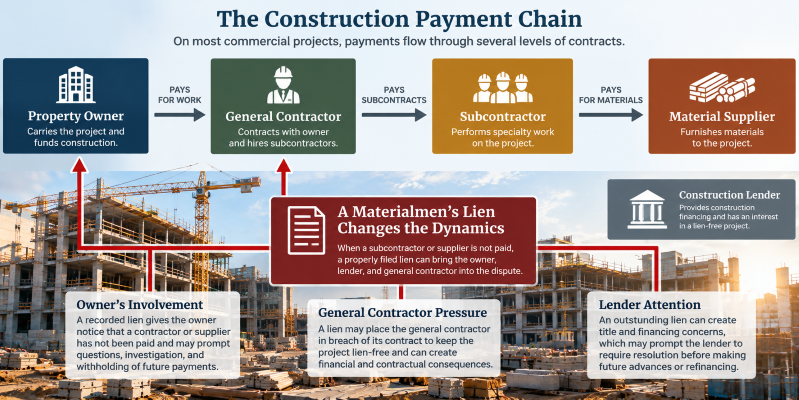
How Georgia materialmen’s liens create payment leverage: A properly filed construction lien can involve property owners, general contractors, and lenders in resolving unpaid subcontractor and supplier claims.
2. A Lien Brings the Property Owner into the Collection Process
Owners of major projects may have approved construction draws without knowing that a lower-tier supplier remains unpaid. A recorded lien can prompt the owner to ask whether the general contractor has received payment, whether money reached subcontractors, and whether other unpaid claims exist. The owner is not automatically personally liable for the debt, and statutory defenses may apply. Nevertheless, the lien can create a practical incentive for the owner to investigate and encourage resolution.
3. A Recorded Construction Lien Can Create Pressure on Construction Lenders
Banks and construction lenders want their collateral protected and loan advances properly documented. Depending on the loan documents, a recorded lien can complicate future draws, title coverage, refinancing, or a sale. A lender may request additional documentation, lien releases, or explanations. A lien does not automatically freeze loan proceeds or take priority over an existing security deed, but it may become a financing issue the parties prefer to resolve.
4. A Lien May Create Contractual Problems for the General Contractor
Many commercial construction contracts require the general contractor to keep the project free of liens arising from unpaid subcontractors and suppliers. Contracts based on forms published by the American Institute of Architects or ConsensusDocs often address payment, lien releases, and related obligations. Depending on the prime contract, an owner may require the general contractor to discharge or bond off a lien, provide security, or address other contractual remedies. Thus an unpaid subcontractor’s claim can become an issue in the general contractor’s relationship with the owner.
5. Construction Liens Can Help Trace Payment Problems Through the Contractual Chain
Construction funds ordinarily flow from owner to general contractor, then to subcontractors and suppliers. A lien can encourage the parties to review payment applications, lien waivers, and accounting records to determine where payments stopped. In appropriate circumstances, joint checks, direct payment arrangements, or negotiated settlements can provide a path to recovery without full-scale litigation. These arrangements require careful contractual and legal review.
6. A Lien Can Reveal Financial Problems Affecting Multiple Project Participants
Georgia materialmen’s liens are recorded in public real estate records. Other subcontractors and suppliers may discover multiple unpaid claims against the same project, suggesting broader financial distress. Credit managers may use this information to investigate credit exposure, adjust future terms, or evaluate security before supplying additional materials. Claimants exchanging information must respect confidentiality and other legal obligations.
7. Liens Can Create Leverage When Commercial Property Is Sold or Refinanced
Developers often need acceptable title to sell a completed building or obtain permanent financing. A recorded lien may need to be released, bonded off, or otherwise addressed before closing. Georgia law provides statutory bonding procedures, so a lien does not necessarily prevent a transaction. Still, resolving it can create expenses, delays, and meaningful settlement incentives.
8. A Lien Can Improve the Company’s Position if Its Customer Becomes Insolvent
A supplier holding only an unsecured claim may recover little if its customer fails. A properly perfected lien may provide a separate remedy against the improved property. Recovery is not guaranteed: priority, equity, statutory defenses, and bankruptcy can affect the claim. Early preservation of rights is therefore important. Cobb Law Group assists businesses with construction credit department consulting to reduce these risks.
9. Filing a Materialmen’s Lien Can Encourage Payment Without Immediate Litigation
Recording a claim of lien and filing a lawsuit are separate steps. A lien may preserve rights while parties negotiate, review payment records, and resolve an account voluntarily. For a national supplier managing many delinquent accounts, the objective is to maximize recovery while controlling collection costs—not necessarily to file the most lawsuits. Some matters call for demand letters, some for liens or payment bond claims, and others for litigation.
10. A Systematic Lien Strategy Can Improve Commercial Accounts-Receivable Management
A strong credit program identifies the property owner and general contractor, tracks Notices of Commencement, preserves delivery records and last furnishing dates, reviews lien waivers, and monitors statutory deadlines.
Under O.C.G.A. § 44-14-361.1, qualifying claimants generally must record a lien within 90 days after completion of their work or furnishing of materials, as applicable. A copy generally must be sent to the owner within two business days after filing using an authorized method. Generally, the required enforcement action must begin within 365 days after filing the lien, and a notice of commencement of the action must be recorded within 30 days after the action begins. Statutory exceptions and a Notice of Contest can alter deadlines. Some lower-tier claimants also face preliminary notice requirements.
See our Georgia mechanic’s and materialmen’s lien primer for more background.
Commercial Construction Collections: Liens Are Only One Part of the Strategy
Depending on the project, unpaid businesses may also have payment bond rights, contract claims, guaranties, or other remedies. Publicly owned property generally is not subject to the same lien remedy as private projects; qualifying claimants may instead have rights under Georgia public works bond laws, including O.C.G.A. § 13-10-63, or the federal Miller Act. Our Georgia construction collections practice helps businesses evaluate and pursue these options.
Frequently Asked Questions
Can a material supplier file a lien without a contract with the owner?
Yes. Qualifying suppliers may have statutory lien rights even without direct contractual privity with the property owner, subject to applicable statutory requirements such as sending a Notice to Owner or Notice to Contractor when required.
Can a Georgia lien help collect a large commercial receivable?
Yes. A properly filed lien may provide potential security and create practical leverage with owners, contractors, and lenders, although recovery is not guaranteed.
Can a lien help collect without a lawsuit?
Yes. Filing may prompt negotiations, but timely litigation or other statutorily permitted enforcement steps may ultimately be required to preserve the lien.
What if the general contractor has been paid but the supplier has not?
The supplier may have contract, lien, or payment bond remedies depending on the facts. A lien may also prompt investigation of how project funds were distributed.
How can national suppliers protect Georgia receivables?
Track project details, Notices of Commencement, furnishing dates, waivers, credit exposure, preliminary liens, and lien and bond deadlines across all Georgia projects.
Cobb Law Group: Georgia Construction Collections for Contractors and Material Suppliers
An unpaid construction account represents working capital that should be available for payroll, materials, new projects, and growth. Effective recovery requires understanding the contracts, payment chain, available security, and statutory deadlines—not merely recording a lien.
Cobb Law Group represents commercial contractors, specialty subcontractors, regional and national material suppliers, and other construction businesses in Georgia payment disputes. Our services include materialmen’s liens, payment bond claims, commercial construction collections, construction litigation, and credit-management consulting.
Whether your business needs to recover one substantial unpaid account or improve collections across multiple projects, our attorneys can help evaluate a strategy.
This article provides general information and does not constitute legal advice. Rights depend on the facts and statutory compliance.